Reading List & Missals
Below is a reading list with resources for learning about the structure and history of the Mass, along with additional readings for priests interested in studying the Tridentine Rite.
Suggested Reading List
Desaint, Pierre-Emmanuel, Abbé. Learn How to Celebrate Low Mass according to the 1962 Missal
Bergman, Lisa. Treasure and Tradition: The Ultimate Guide to the Latin Mass
Fiedrowicz, Michael. The Traditional Mass: History, Form, and Theology of the Classical Roman Rite
Hintgen, Fr. Victor What the Mass Means: An Introduction to the Rites of the Latin Mass
Please, Matthew, Restoring Lost Customs of Christendom
Moorman, George J., Monsignor. The Latin Mass Explained
Williamson, Richard. Eleison Comments
Schneider, Athanasius, Bishop. The Catholic Mass: Steps to Restore the Centrality of God in the Liturgy
Therese, M. Joan. My See and Pray Missal. Books for children
Various authors. The Liturgy catalog of books from Angelico Press.
–––. The Latin Mass catalog of books from Sophia Institute Press.
–––. The Latin Mass catalog of books from TAN Books.
Traditional Catholic Missals
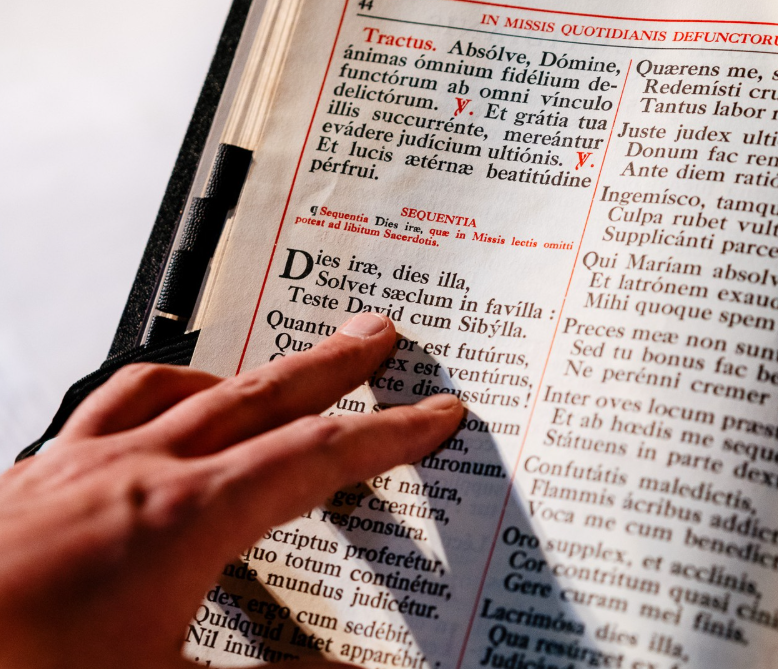
What is a Missal?
-
Historical Roots: The Missal evolved from ancient sacramentaries and graduals. The standardized Roman Missal was promulgated by Pope St. Pius V in 1570 following the Council of Trent to promote unity in worship amid the Reformation.
-
The 1962 Missal of John XXIII is recommended— it’s the one you’ll actually see on the altar of most Traditional Latin Masses today.
It’s the only edition authorized for the Extraordinary Form by Summorum Pontificum (2007).
It includes the 1955 Holy Week reforms (evening Easter Vigil, unfolded palms, etc.) that every TLM community celebrates.
That said, the 1920 Missal of Benedict XV can still be used for Mass, study, or private prayer. Its core texts are identical, and some priests prefer its pre-1955 Holy Week rites.
It is ultimately a personal preference - either is sufficient.
-
Ordinary: The fixed prayers and responses that are the same (or mostly the same) every Mass (e.g., Kyrie, Gloria, Credo, Sanctus, Agnus Dei). This section is usually in the center of the missal.
Propers: The variable parts that change daily (Introit, Collect, Epistle, Gradual, Gospel, Offertory, Secret, Postcommunion, etc.).
-
Choose a hand missal (e.g., with Latin-English parallel text) or a full altar missal for reference.
Know the date's liturgical classification: Sunday, feast day, ferial (weekday), or vigil. Use the General Calendar at the front.
-
Begin with the Propers: Prayers at the Foot of the Altar (often in the Ordinary), then the Introit (entrance antiphon).
Follow the Ordinary for the Kyrie, Gloria (omitted in Advent/Lent or Requiem Masses), etc.
-
The Epistle and Gospel are in the day's Propers.
After the Gospel, follow the Ordinary for the Creed (on Sundays and major feasts).
-
Offertory verse (Propers), then Ordinary prayers.
The Preface varies by season/feast—missals have a section for Proper Prefaces.
The Canon is silent (in the Ordinary); read along quietly.
Sanctus, Agnus Dei, and Communion verse follow.
Last Gospel (usually John 1:1–14, in the Ordinary).
Many missals include a posture guide (sit/stand/kneel) as an insert.
The Missal (from Latin Missale, meaning "book for the Mass") is the official liturgical book of the Roman Rite containing all the texts, prayers, rubrics (instructions), and chants needed to celebrate Holy Mass.
It serves as the "playbook" for the priest, uniting the unchanging parts of the Mass (the Ordinary) with variable texts for specific days (the Propers).
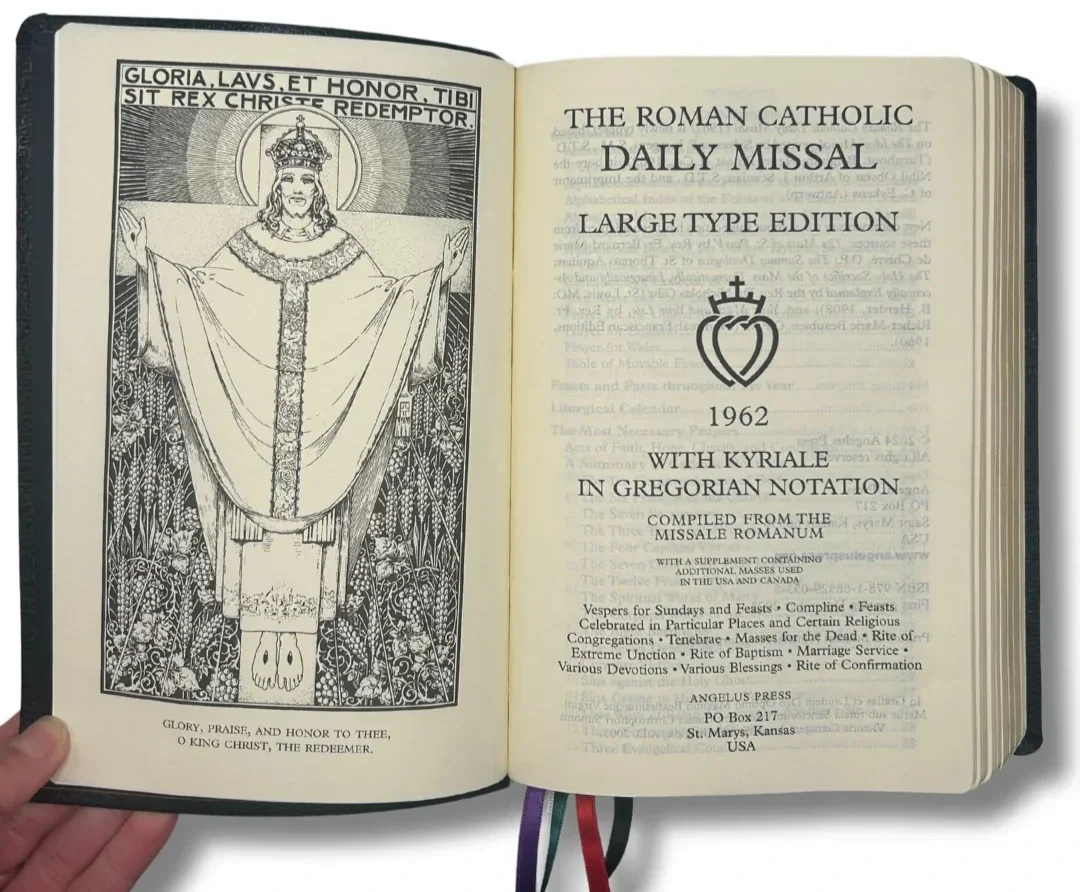
Issued by Pope St. John XXIII in 1962, this is the final pre-Vatican II edition—the normative text for the Extraordinary Form per Summorum Pontificum (2007). It consolidated all prior reforms into one book:
Key Changes from 1920:
1955 Holy Week Reform (Pius XII): Restored ancient rites—e.g., Palm Sunday procession simplified, Easter Vigil moved to evening with extended Liturgy of the Word and baptisms.
1960 Code of Rubrics (John XXIII): Further calendar streamlining—eliminated vigils/rubrics for many feasts, ranked days (I-IV class), added St. Joseph to the Communicantes in the Canon.
Significance: It's the missal for most Traditional Latin Masses today, preserving the "most ancient form" (Sacrosanctum Concilium, no. 23).
1962 Missal of John XXIII
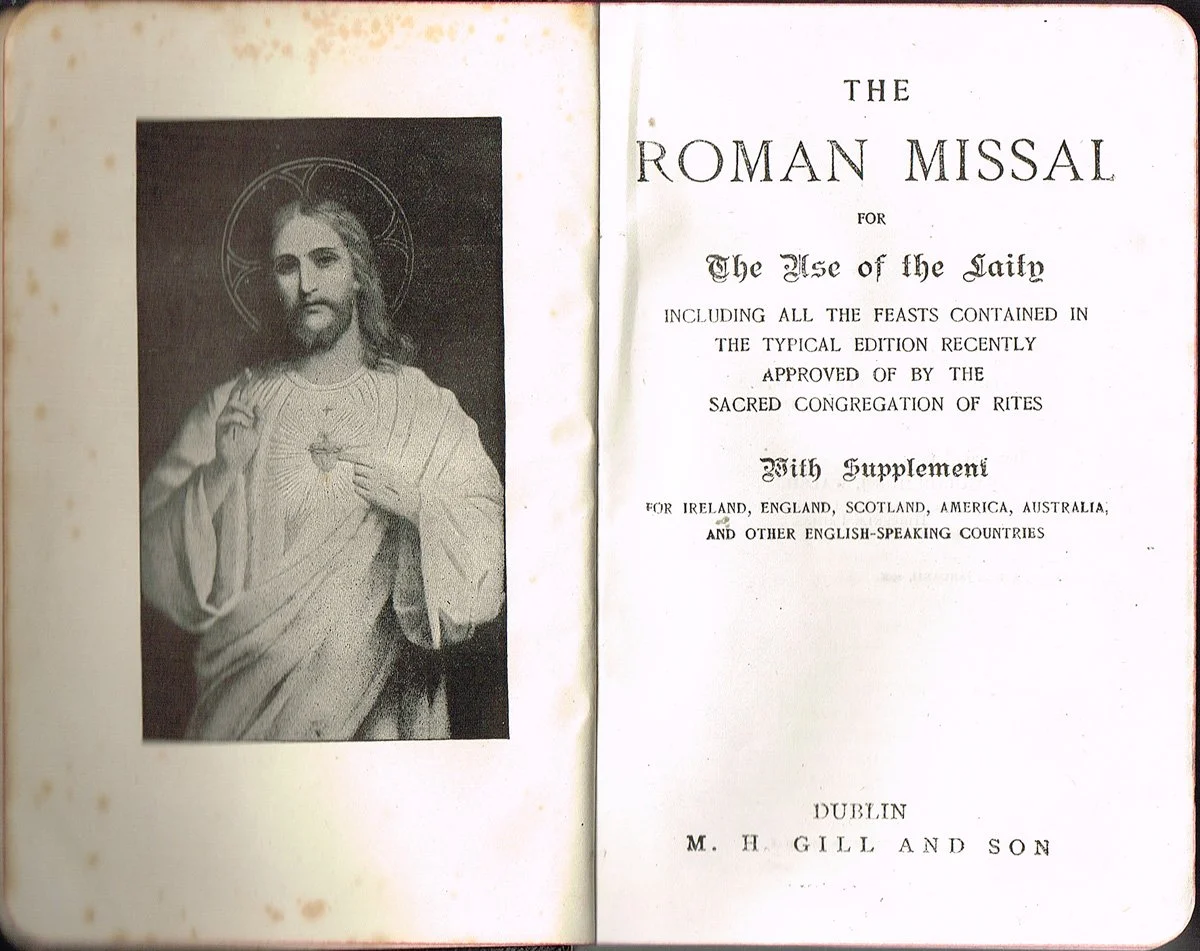
Promulgated by Pope Benedict XV on July 25, 1920, via the decree Cum hac nostra aetate, this missal reformed the rubrics and calendar based on earlier 20th-century updates (e.g., 1911-1914 from the Congregation of Rites). It became the standard until 1962, incorporating:
Why do people prefer it?
Historical purity: Uses the pre-1955 Holy Week rites (e.g., folded palms, Easter Vigil at dawn, 12 prophecies) seen as closer to the Tridentine tradition before mid-century “simplifications.”
The 1920 Missal of Benedict XV